
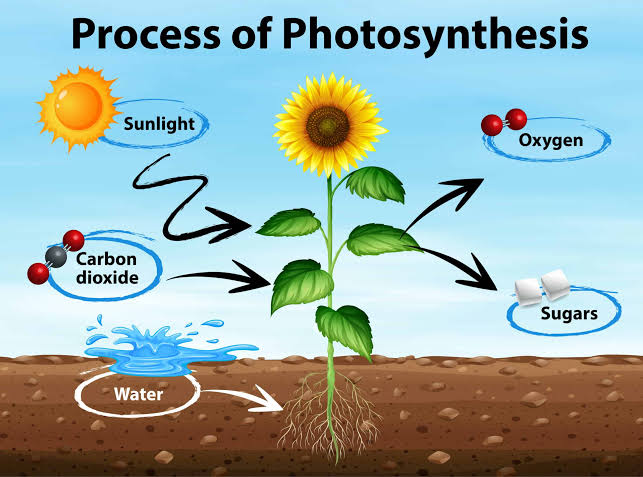
Redox reactions are very important in living things. For example, one redox reaction, photosynthesis, provides food for the plant, and another one, respiration, keeps you alive.
Even though the oxidation and reduction reactions take place simultaneously, chemists describe these reactions separately. The separate oxidation and reduction reactions are called half-reactions. Redox reactions require a track of each electron to each atom in chemical reactions. Redox reactions are also encountered in electrochemistry.
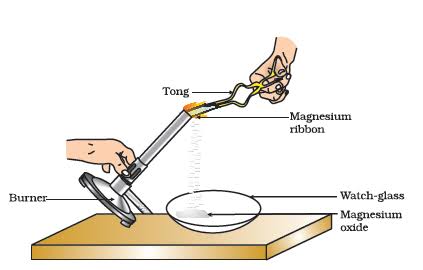
Consider the combustion of magnesium ribbon.
Mg²⁺ — oxidised
O²⁻ — reduced
In the above chemical reaction, magnesium loses electrons and so it is oxidised. At the same time oxygen gains electrons and so it is reduced. Thus, the reaction between magnesium and oxygen is a redox reaction.
(1) Which of the following chemical equations represents a redox reaction? For this redox reaction, determine which reactant is oxidised and which reactant is reduced.
Show answer
Redox reaction. Mg is oxidised (0 → +2); H in H₂O is reduced (+1 → 0).
Show answer
Redox reaction. H₂ is oxidised (0 → +1); Cu in CuO is reduced (+2 → 0).
Show answer
Redox reaction. Zn is oxidised (0 → +2); Cu²⁺ is reduced (+2 → 0).
Show answer
Redox reaction. Mg is oxidised (0 → +2); H⁺ is reduced (+1 → 0).