Oxygen
Gain or loss of oxygen.

Understand oxidation and reduction through oxygen, hydrogen, electron transfer and oxidation numbers.
Redox reactions can be explained in four important ways.
Gain or loss of oxygen.
Loss or gain of hydrogen.
Loss or gain of electrons.
Increase or decrease in oxidation number.
Oxidation and reduction can be understood through the gain and loss of oxygen.
When a substance gains oxygen in a chemical reaction, it is oxidised. This process is called oxidation.
Nitrogen gains oxygen and is therefore oxidised.
When a substance loses oxygen in a chemical reaction, it is reduced. This process is called reduction.
Copper(II) oxide loses oxygen and is reduced to copper.
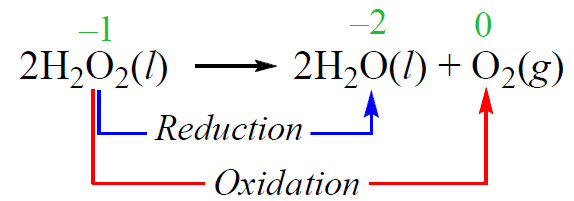
Gain oxygen means oxidation. Loss of oxygen means reduction.
Hydrogen transfer is another way to identify oxidation and reduction.
Means oxidation
Means reduction
Hydrogen sulphide loses hydrogen when it reacts with chlorine.
Hydrogen sulphide loses hydrogen and is oxidised.
Chlorine gains hydrogen when it reacts with hydrogen.
Chlorine gains hydrogen and is reduced.
Oxygen belongs to the electronegative elements, while hydrogen belongs to the electropositive elements. These ideas extend the definitions of oxidation and reduction.
Addition of oxygen or an electronegative element to a substance.
Removal of hydrogen or an electropositive element from a substance.
Removal of oxygen or an electronegative element from a substance.
Addition of hydrogen or an electropositive element to a substance.
The modern explanation of oxidation and reduction through the loss and gain of electrons.
Some oxidation-reduction reactions do not involve oxygen or hydrogen. In these reactions, one substance gives up electrons while another substance accepts them.
Each zinc atom loses two electrons and forms a zinc ion.
Each copper(II) ion gains two electrons and forms copper metal.
Zinc is oxidised while copper(II) ions are reduced. Both processes occur together.
Loss of electrons by an element, compound or ion.
Gain of electrons by an element, compound or ion.
Oxidation and reduction can also be identified by changes in oxidation numbers.
Oxidation-reduction reactions are characterised by a change in the oxidation numbers (oxidation states) of some elements in the reactants.
The oxidation number of phosphorus increases from 0 to +5. Therefore, phosphorus is oxidised.
The oxidation number of oxygen decreases from 0 to −2. Therefore, oxygen is reduced.
Means oxidation
Means reduction
Compare oxidation and reduction using the following table.
| CONCEPT | OXIDATION | REDUCTION |
|---|---|---|
| Oxygen | Gain of oxygen | Loss of oxygen |
| Hydrogen | Loss of hydrogen | Gain of hydrogen |
| Electrons | Loss of electrons | Gain of electrons |
| Oxidation Number | Increase | Decrease |